Chhath Puja is the most ancient and grandest festival of Bihar, dedicated to the Sun God (Surya) and Chhathi Maiya. Spanning four days of strict fasting, holy bathing, and standing in water, devotees (vrattis) express gratitude to the sun for sustaining life on earth. It is a unique festival because it features offerings to both the setting sun and the rising sun, symbolizing the cycle of life.
1. The Four Days of Rituals
The festival involves rigorous purification rituals over four days:
- Day 1: Nahay Khay: Devotees take a dip in the holy Ganges or local river and eat a simple meal of bottle gourd curry and rice cooked in clay pots.
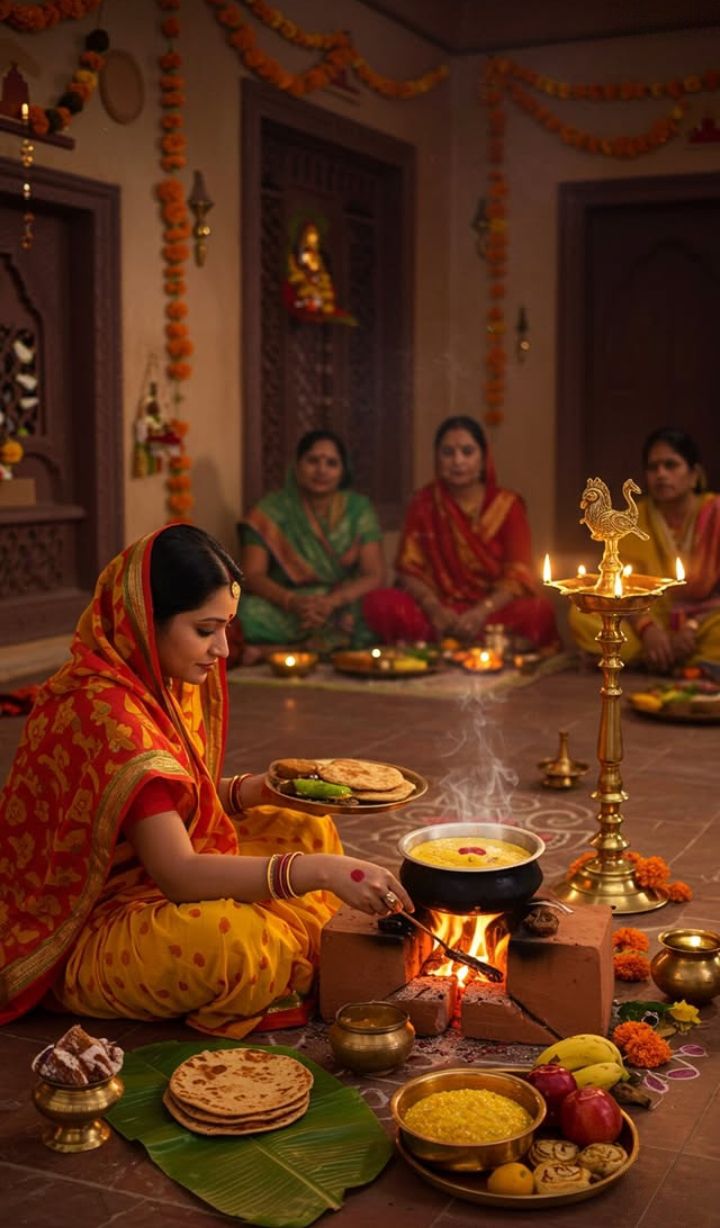
- Day 2: Lohanda & Kharna: Devotees observe a strict dry fast all day, breaking it after sunset with a sweet offering of jaggery kheer and roti cooked on wood fires.
- Day 3: Sandhya Arghya: Devotees offer arghya (water and milk offerings) to the setting sun, standing waist-deep in water at local riverbanks (ghats).
- Day 4: Usha Arghya: Devotees offer arghya to the rising sun, breaking their 36-hour fast.
2. The Holy Prasad: Thekua
The primary prasad of Chhath is Thekua, a hard, crunchy cookie made of whole wheat flour, jaggery, pure ghee, and dry coconut, flavored with fennel and cardamom. The cookies are shaped using beautifully carved wooden moulds (saancha) depicting sun and leaf motifs, then fried in pure ghee.
3. The Cultural Vibe
During Chhath, the entire state of Bihar undergoes a spiritual transformation. Streets are cleaned, ghats are illuminated, and traditional Chhath folk songs sung by Sharda Sinha play in every corner, creating a serene, emotional atmosphere of community harmony.